-
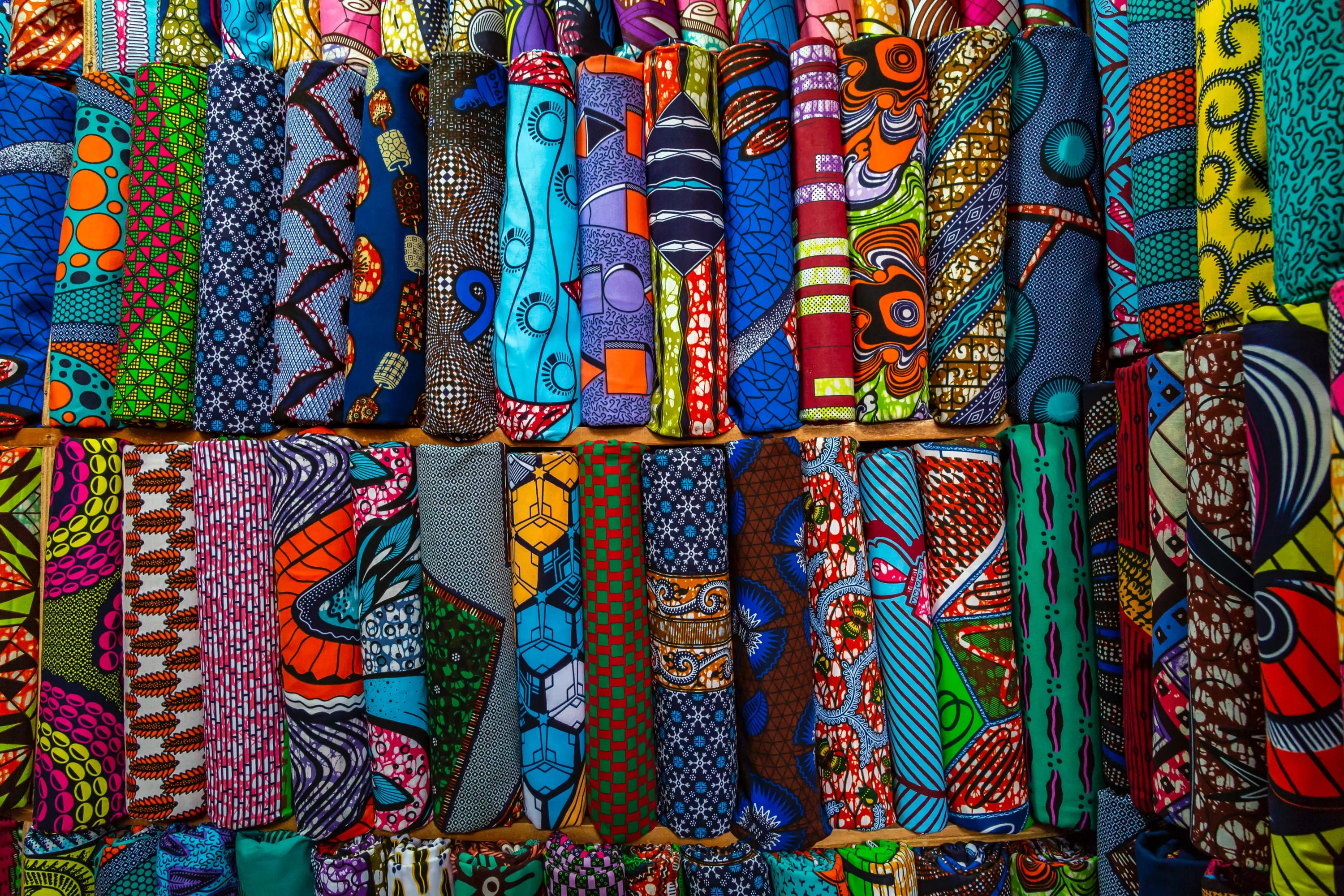 Ankara
A pile of Ankara fabrics resting on a shelf.
Ankara is the common name for the bright, colorful patterned fabric often called African wax print. This very popular cotton textile is used everywhere in West and Central Africa. It is made using a machine process where hot wax is pressed onto the fabric to block the dye, which creates the sharp colors and signature tiny crackle lines. Even though the fabric's manufacturing technique came from outside Africa, it has become a strong symbol of African identity and fashion. The hundreds of designs on Ankara cloth often tell a story, represent a proverb, or signify important cultural meanings.
-
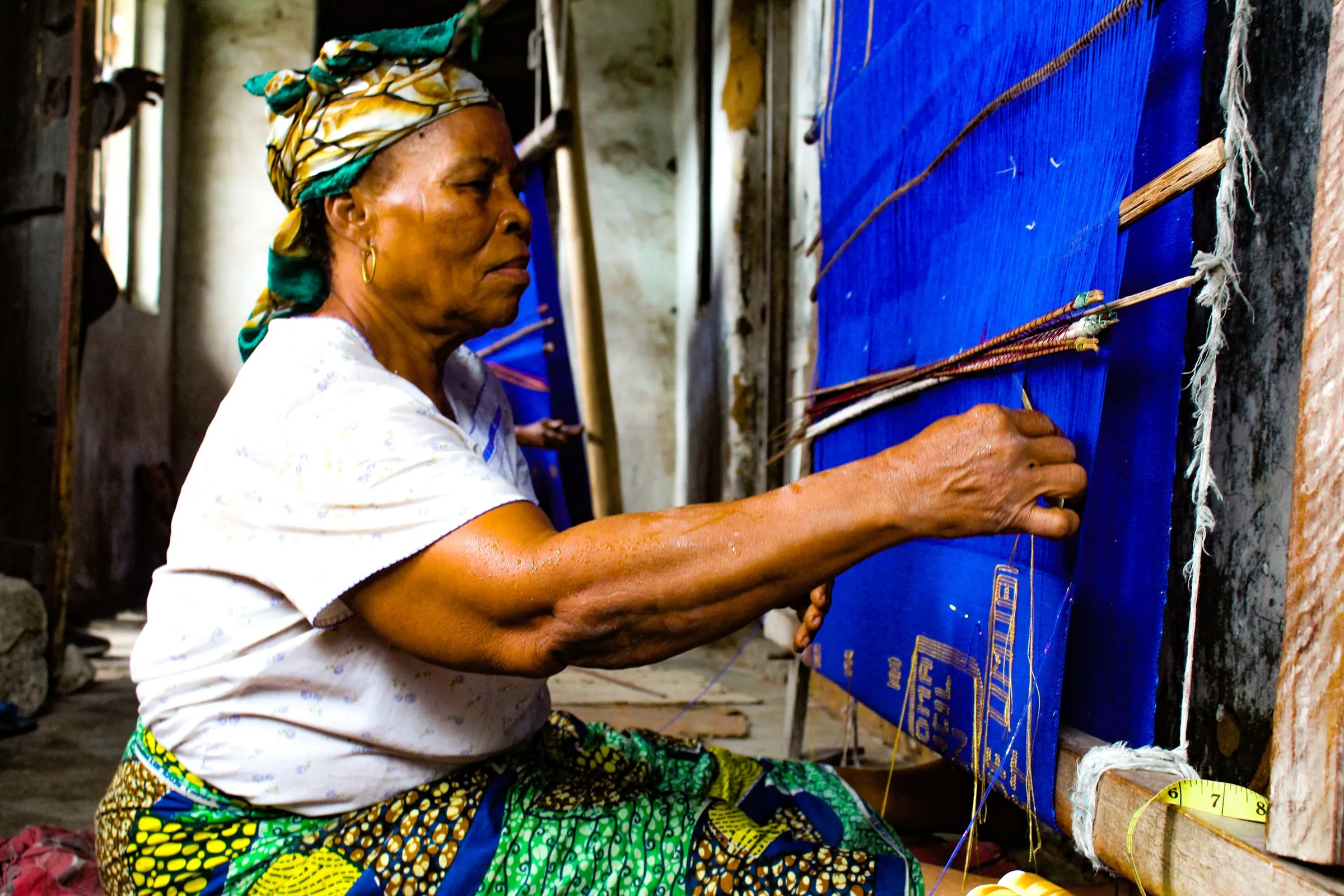 Akwete
A woman deeply focused on weaving Akwete using a traditional loom.
Akwete cloth is a beautiful, handwoven fabric made by the Igbo people in Nigeria, specifically in the town of Akwete. This textile is traditionally created by women on a special loom and is known for feeling heavy and dense. Its distinct look comes from weaving in extra threads, called weft threads, by hand. These added threads use bright, contrasting colors and materials like silk or rayon to form the complex, decorative patterns within the fabric itself.
-
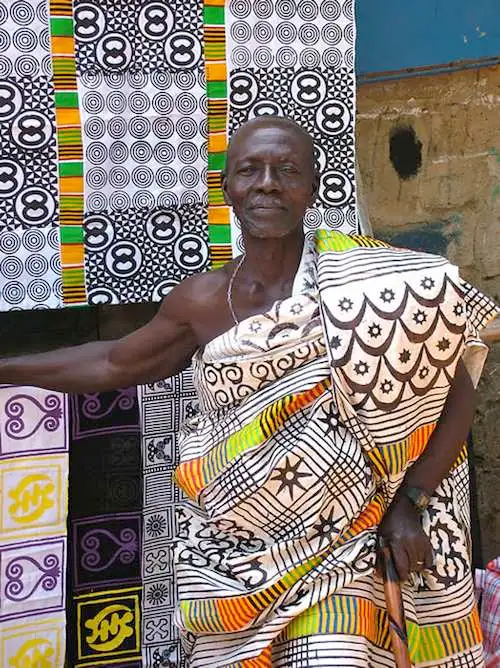 Adinkra
An elder in his traditional Adinkra cloth.
The Adinkra cloth is fundamentally a visual language: each of the hundreds of distinct symbols carries a specific proverb, philosophical concept, historical event, or cultural value (e.g., wisdom, permanence, resilience). It was traditionally reserved for funeral rites and other solemn occasions, but today is widely used in modern Ghanaian and international fashion to express cultural identity and moral guidance
-
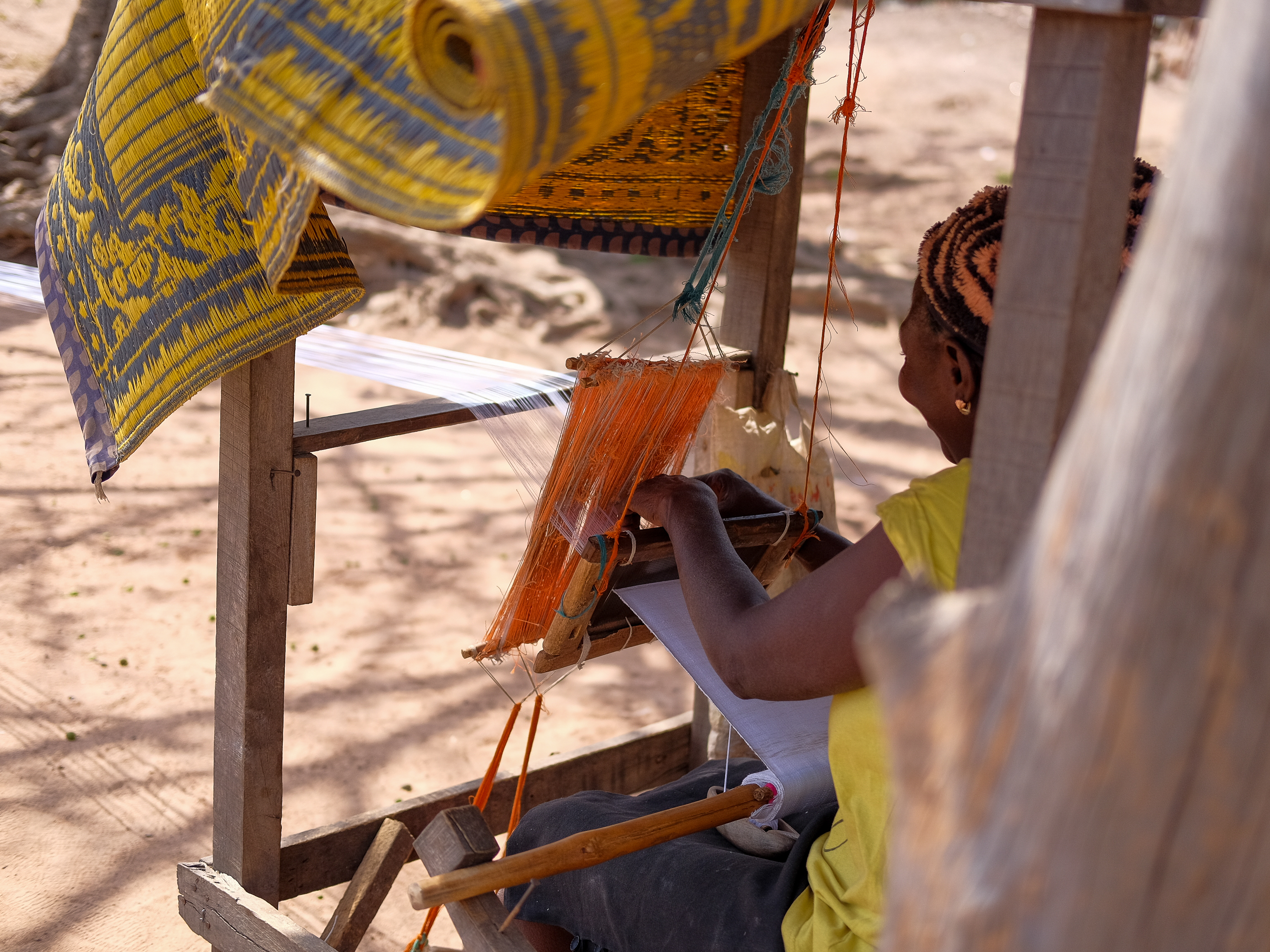 Aso-Oke
A woman weaving Aso-oke on a traditional handloom.
Aso Oke is a renowned, hand-loomed fabric originating from the Yoruba people of Nigeria. Its name literally means "top cloth" and is synonymous with high social status and prestige. The textile is traditionally woven by men on a horizontal loom in narrow strips (about four to six inches wide), which are then meticulously sewn together to form larger garments. Aso Oke is reserved for the most important ceremonial occasions, such as weddings, naming ceremonies, funerals, and chieftaincy installations. It is prized for its complex patterns, rich colors, and various textures, which are created using materials like silk (sanyan), cotton, or synthetic metallic threads, making it a visible declaration of wealth and cultural identity.
-
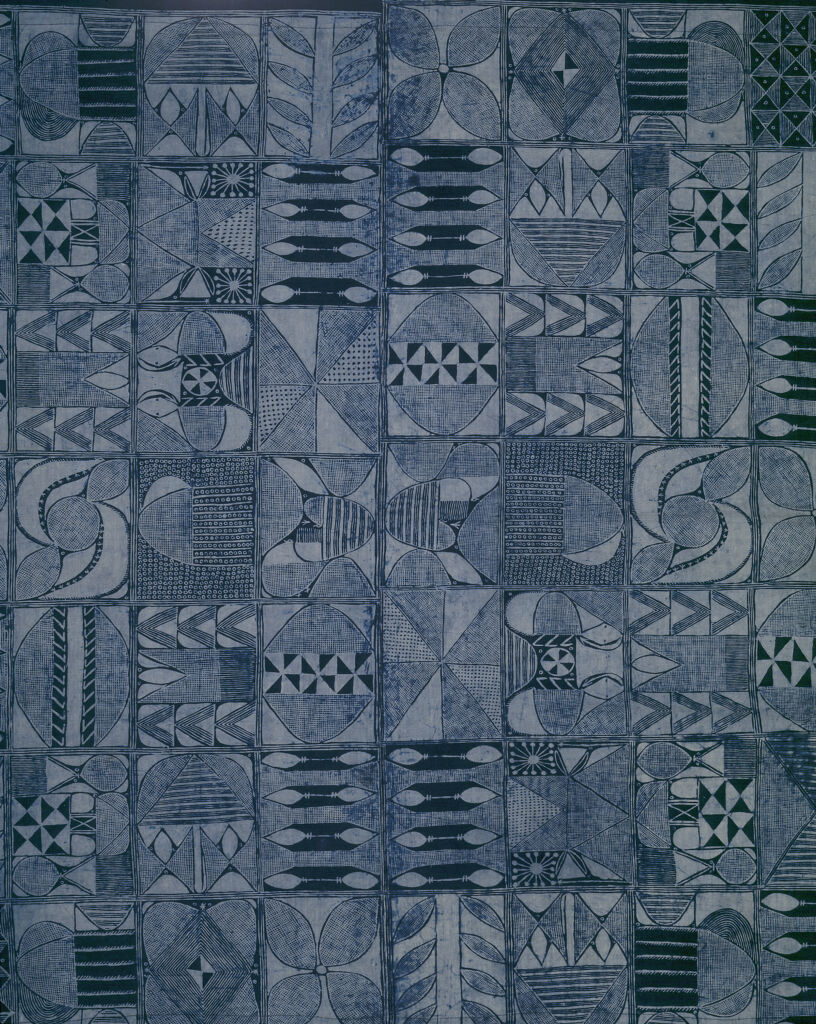 Adire Eleko
A display of Adire Eleko in a museum.
Adire Eleko is a Yoruba dyeing technique from Nigeria where artisans use a thick paste made from cassava starch to draw patterns onto cotton fabric. When the cloth is later dipped into the deep blue indigo dye, the starch acts as a shield, stopping the dye from reaching the fabric underneath. When the paste is finally washed away, it reveals detailed, light-colored designs—often featuring geometric shapes, animals, and plants—against the vibrant indigo background.