-
Title
-
Bogolanfini
-
Description
-
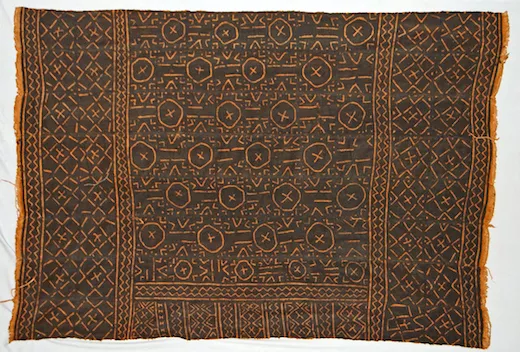
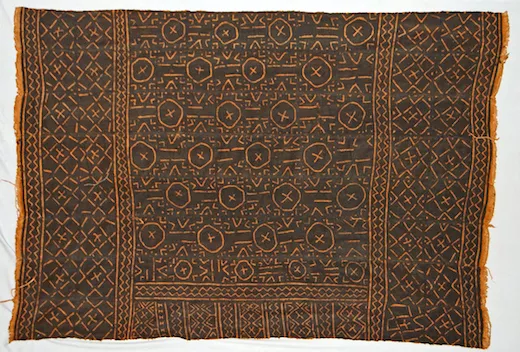
Cloth/circumcision equipment composed of eight plain woven narrow strips hand sewn together selvedge to selvedge. Bògòlanfini, usually called "mud cloth," is a cotton fabric handmade in Mali. It is traditionally dyed using special fermented mud. This cloth is a very important part of old Malian culture and has more recently become a powerful symbol of the country's identity. Today, you can find this unique fabric sold worldwide for use in fashion, art, and home decoration.
-
Creator
-
Bamana Ethnic Group
-
Date
-
1980
-
Place
-
Mali: Mali is a large, landlocked West African nation whose identity is inextricably linked to the Niger River and a legacy of powerful ancient empires. Historically, it was home to the Mali Empire and the legendary city of Timbuktu, which flourished as a center of trans-Saharan trade in gold and salt, and a major hub for Islamic scholarship. Though facing modern challenges, Malian culture remains vibrant, preserved through the oral traditions of the Griots and expressed through diverse ethnic groups like the Bambara, Dogon, and Tuareg. Textiles like the famous Bògòlanfini (mud cloth) reflect this rich heritage and deep connection to the land. Mali's story is one of profound historical wealth and enduring cultural resilience.
-
Time Period
-
Twentieth Century
-
Cultural Use
-
•Spiritual and Ritual Protection: The unique, geometric patterns were worn by hunters and warriors for both spiritual protection (believed to disorient evil spirits) and effective camouflage.
•Life Milestones: The cloth was essential for marking significant life transitions. It was worn by young women after their coming-of-age ceremonies, used during childbirth, and sometimes served as a burial shroud for highly respected elders.
•Social Status: The complexity and color of the patterns communicated the wearer's social status and achievements within the community. For specific purposes, such as desert camouflage, the cloth was sometimes dyed red instead of the traditional black/brown.
•Cultural Symbolism: Since the 1980s, the cloth has been actively promoted as a powerful symbol of Malian cultural identity both at home and internationally.
•Fashion and Decor: Malian and global designers have embraced the distinctive patterns, integrating them into high fashion (jackets, tunics, accessories) and home décor (upholstery, throws).
•Tourist Trade: A commercialized version of the cloth is now widely produced for the tourist market, often utilizing stencils and chemicals to speed up the dyeing process for mass-produced items like towels and souvenirs.
-
Technique
-
The creation of Bògòlanfini is a meticulous, labor-intensive resist-dyeing method rooted in chemical artistry. The process begins with preparing the cotton cloth, which is first woven by men into narrow strips and then soaked in an infusion of plant leaves, such as n'gallama, to establish a yellow base color rich in tannins. Meanwhile, iron-rich mud from riverbeds is collected and fermented for up to a year to concentrate gallic acid. Artisans then use sticks or brushes to hand-paint intricate, symbolic patterns onto the yellow fabric. The essential step is the chemical reaction: the gallic acid in the mud reacts with the tannins in the cloth and the iron oxides in the mud, creating a stable, dark brown and black pigment that permanently bonds to the fibers. After multiple applications, drying periods, and washes to deepen the color, the cloth is finally washed to remove the excess mud, revealing the final, high-contrast design, with optional bleaching used to create lighter patterns.
-
Textile Type
-
Bogolanfini
-
Region
-
Sub-Saharan Africa: Mali: Nerekoro
Nerekoro is a historically significant village in Mali, recognized as a key center for the traditional creation of Bògòlanfini, or mud cloth. It is the ancestral home of the Bamana people who perfect the meticulous, year-long, chemical resist-dyeing process used to create the fabric’s permanent, symbolic patterns. Textiles sourced from Nerekoro are celebrated for their authenticity, craftsmanship, and adherence to the ceremonial traditions of this unique Malian art form.
-
Item Type
-
Cotton
-
Language
-
English
 Bogolanfini