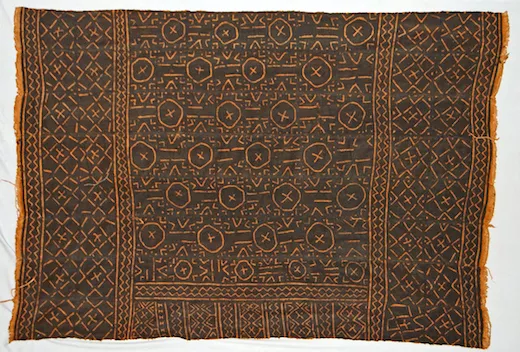
Bogolan (or bogolanfini) is a traditional Malian textile known as "mud cloth." This fabric is created using a unique dyeing technique: hand-woven cotton is patterned using fermented river mud. The word bogolanfini itself reveals the process: bogo (earth), lan (by means of), and fini (cloth).
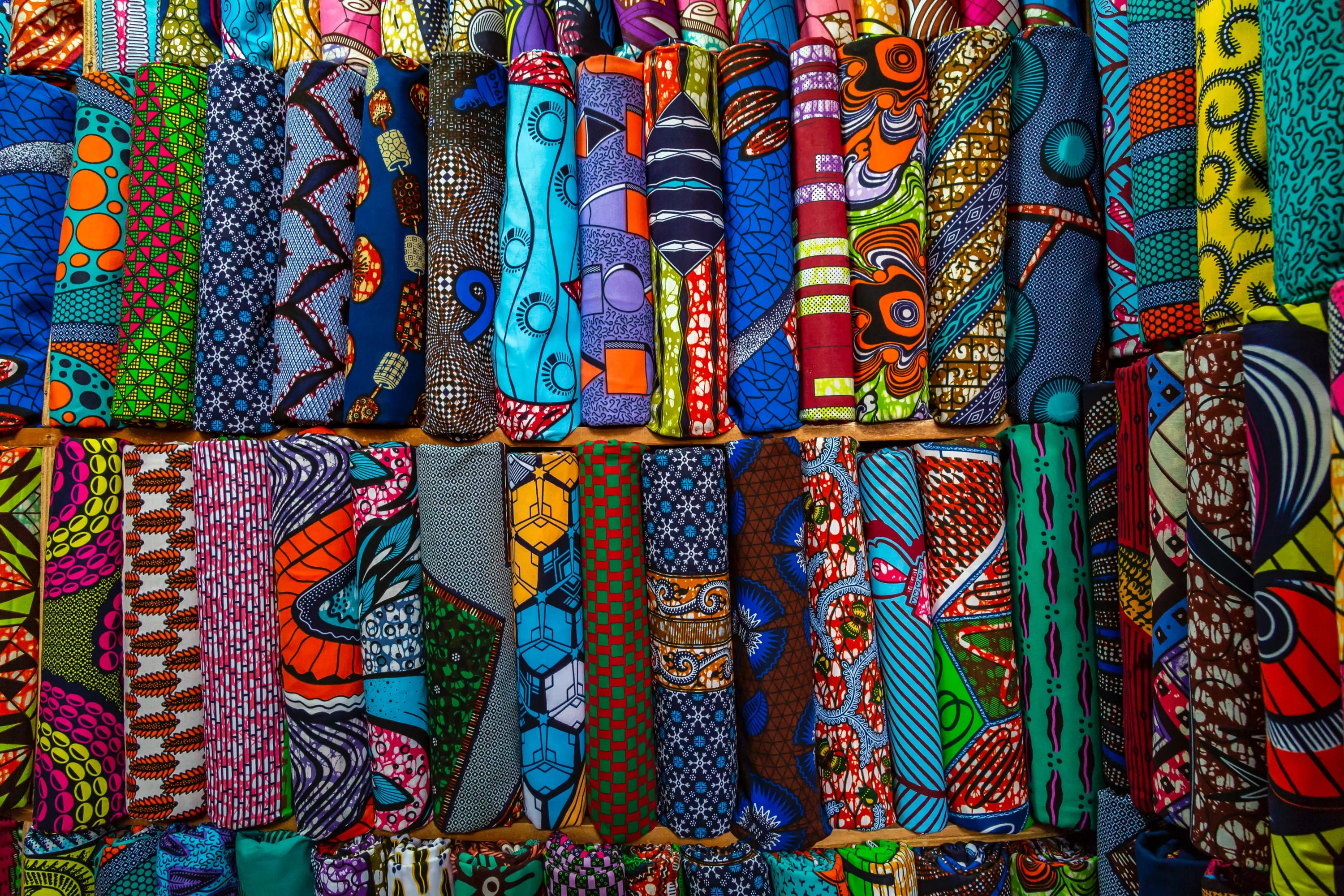
The Ankara textile is a brightly colored, 100% cotton fabric known worldwide for its bold patterns. Its unique appearance comes from a wax-resist dyeing process that ensures the vibrant prints show up clearly on both sides of the material.
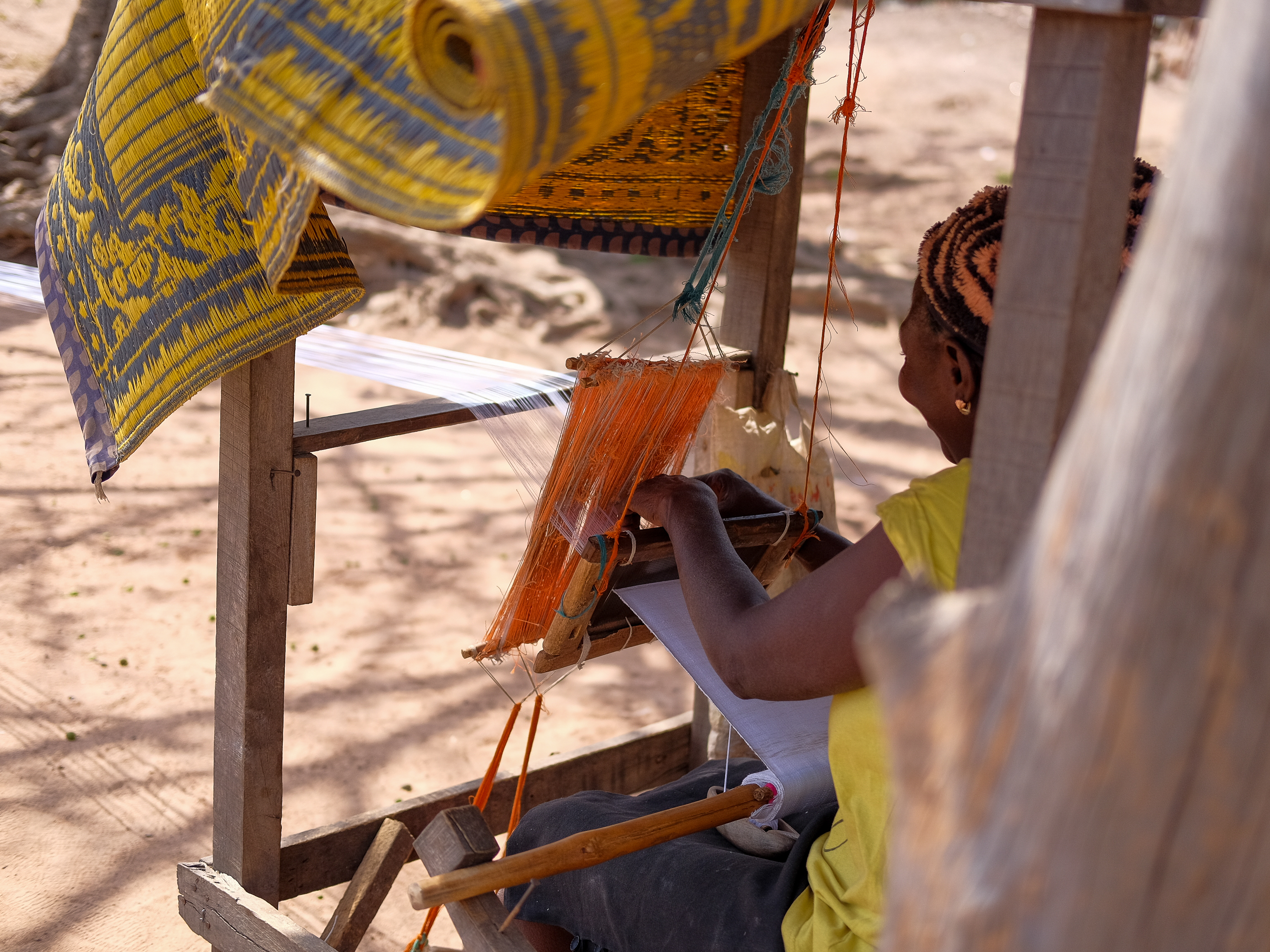
Akwete cloth is a distinctive, handwoven textile from Igboland, Nigeria. It represents the traditional Igbo weaving art. Using materials like sisal-hemp, raffia, and cotton, the weavers of Akwete transform raw fibers into beautifully finished cloth.
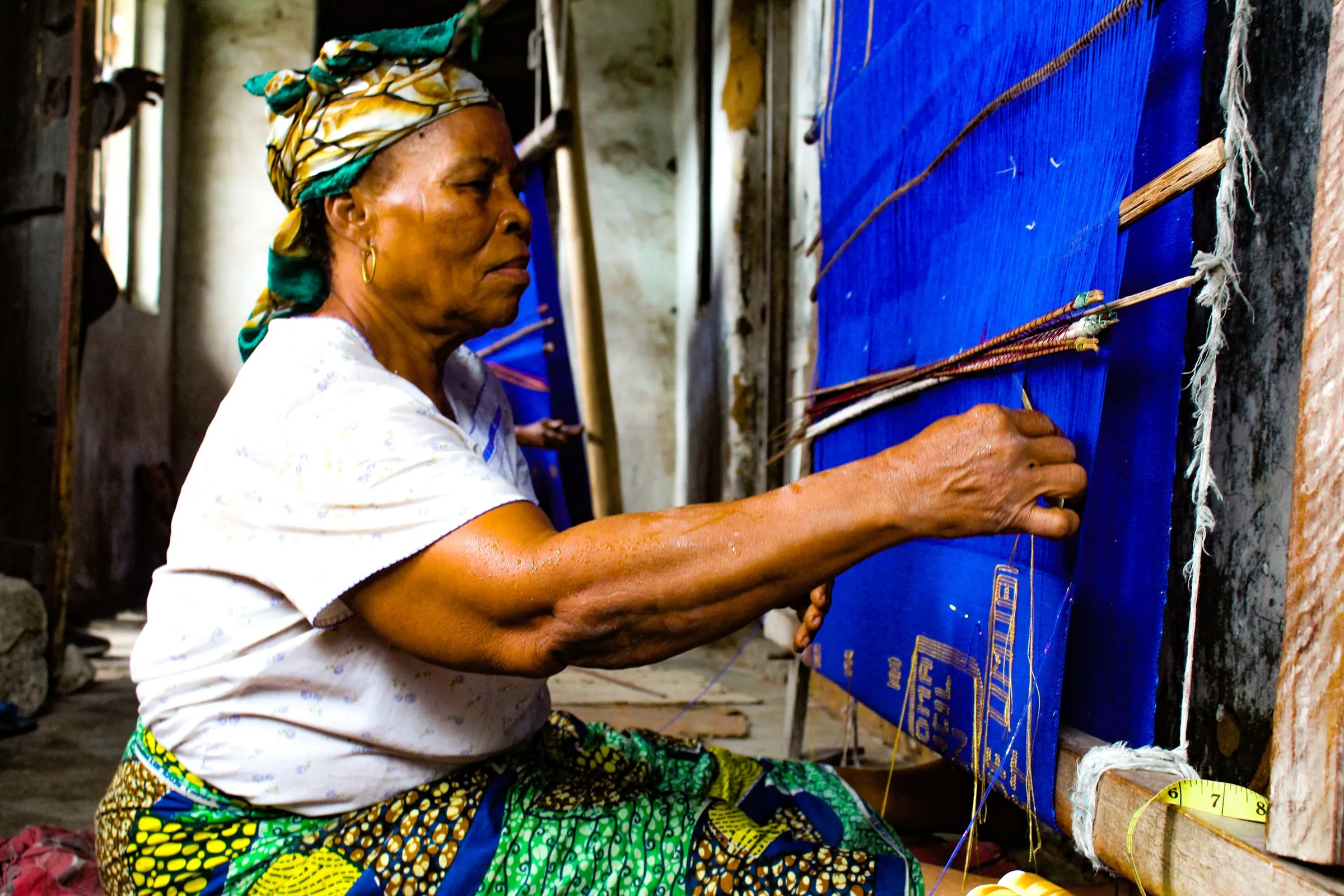
Aso Oke is the prestigious, handwoven fabric of the Yoruba people in southwestern Nigeria. Its name literally means "cloth from the hinterland." Made primarily from cotton, this textile is used for major events, such as weddings, naming and festivals.
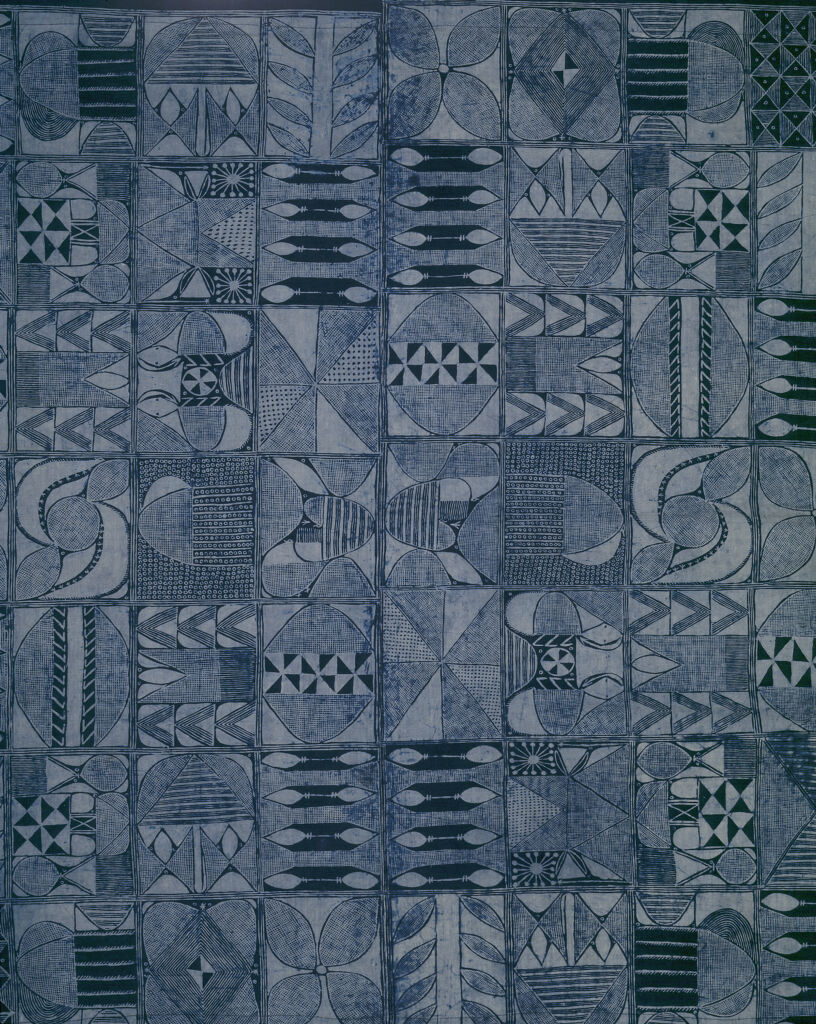
Adire Eleko is a Yoruba dyeing tradition from Nigeria that uses a cassava starch paste to create patterns. This paste is applied to cotton to block the indigo dye, resulting in beautiful light blue designs on a characteristic deep blue cloth.
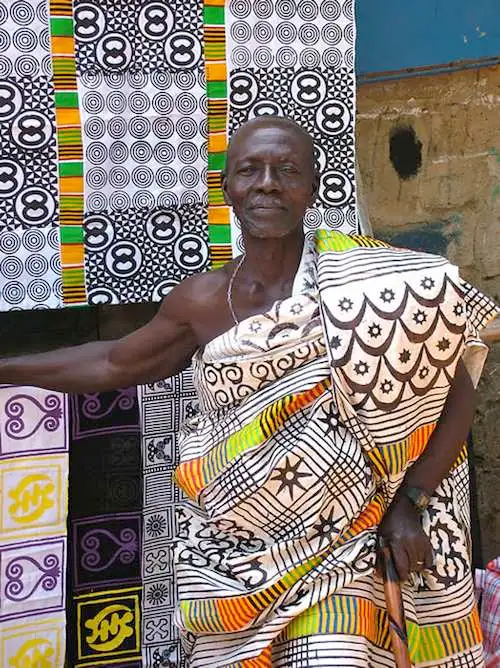
Adinkra symbols originate from Ghana's Akan people. These visuals represent traditional proverbs and concepts, and were historically printed onto fabrics for use in ceremonial rites. The word Adinkra means "farewell" in the Twi language, linking it to its use at funerals.