-
Title
-
Adinkra
-
Description
-
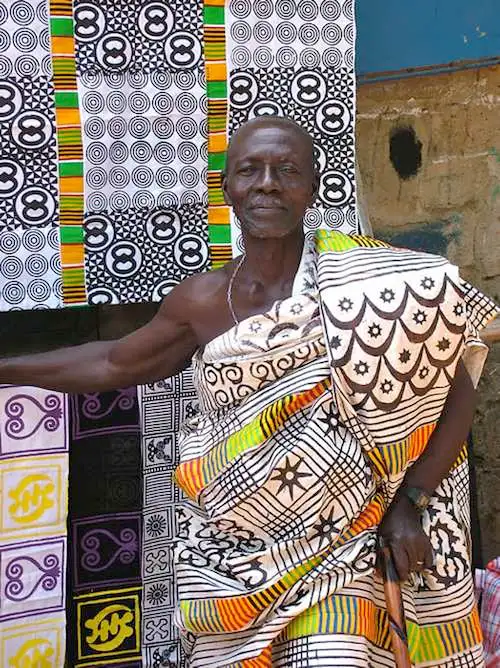
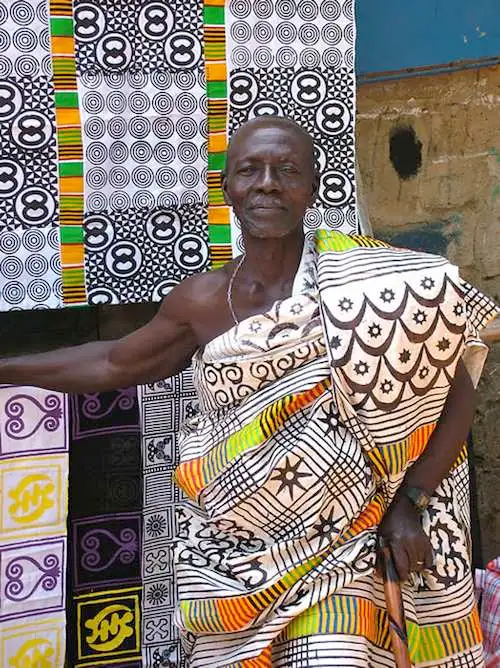
An elder in his traditional Adinkra cloth.
The Adinkra cloth is fundamentally a visual language: each of the hundreds of distinct symbols carries a specific proverb, philosophical concept, historical event, or cultural value (e.g., wisdom, permanence, resilience). It was traditionally reserved for funeral rites and other solemn occasions, but today is widely used in modern Ghanaian and international fashion to express cultural identity and moral guidance
-
Creator
-
Cynthia Samaké
-
Date
-
12/17/2011
-
Place
-
Ntonso, Ghana
-
Time Period
-
Nineteenth Century
-
Cultural Use
-
Adinkra cloth serves as a powerful visual language and method of cultural communication within the Akan community. Every single Adinkra stamp is more than just decoration; it is directly connected to a specific proverb, saying, or folktale, giving the textile a deep layer of symbolic meaning. By combining these motifs, the cloth can communicate a vast range of ideas, including moral concepts like patience, unity, strength, and forgiveness, acting as a way to preserve traditional knowledge and ethics. The most famous application is the use of stamped Adinkra cloth, especially worn during funerary practices and other significant ceremonies. Historically, the symbols were critical in guiding the deceased into the afterlife by expressing final, meaningful messages. Today, these potent symbols are not limited to fabric and can be seen on various objects, including jewelry, carvings, and even architectural designs.
-
Technique
-
Hand-printing
The Adinkra technique is a specialized stamping process that transforms plain cloth into a symbolic, philosophical textile. The process begins with the preparation of two key materials: the stamps and the dye. Adinkra symbols, which represent proverbs, metaphors, and cultural concepts, are meticulously carved into the flat surface of calabash gourds. Meanwhile, the thick, black, tar-like dye known as Adinkra aduro is formulated by boiling the bark of the Badie tree with iron slag for many hours until a viscous mixture is achieved. To apply the patterns, artisans first mark the cotton fabric with lines to create a precise grid layout. The carved calabash stamps are then dipped into the warm Adinkra aduro dye and carefully pressed onto the fabric with even pressure within the grid squares. This repeated stamping process creates the final pattern, resulting in a textile that serves as a visual record of traditional knowledge and ethical guidance, typically worn for significant life events.
-
Textile Type
-
Adinkra
-
Region
-
Ghana
Adinkra cloth originates from the Ashanti Region of Ghana, primarily within the historical and cultural areas belonging to the Asante and neighboring Gyaman peoples (who reside near the border of modern Ghana and Côte d'Ivoire). Kumasi, the capital of the Ashanti Region, is a major cultural center for this craft. The production region is characterized by dense forest resources, which traditionally provided the bark of the Badie tree used to create the dark, iron-rich Adinkra aduro dye.
-
Item Type
-
Cloth
-
Language
-
English
 Adinkra