-
Title
-
Akwete
-
Description
-
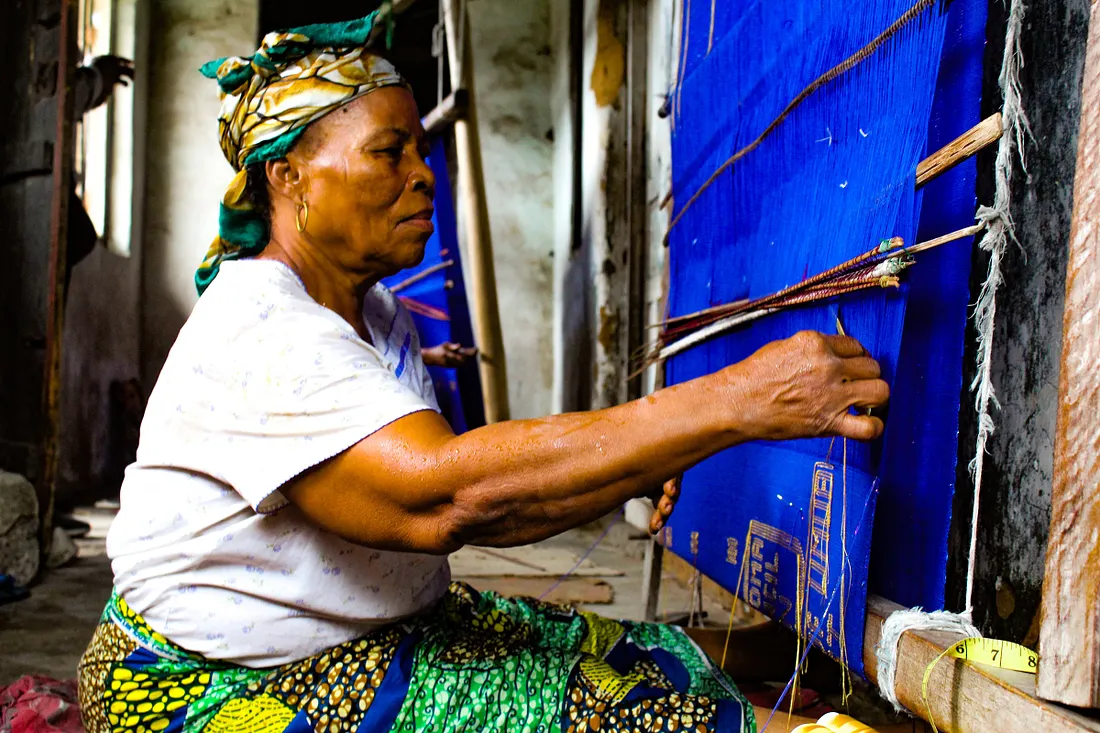
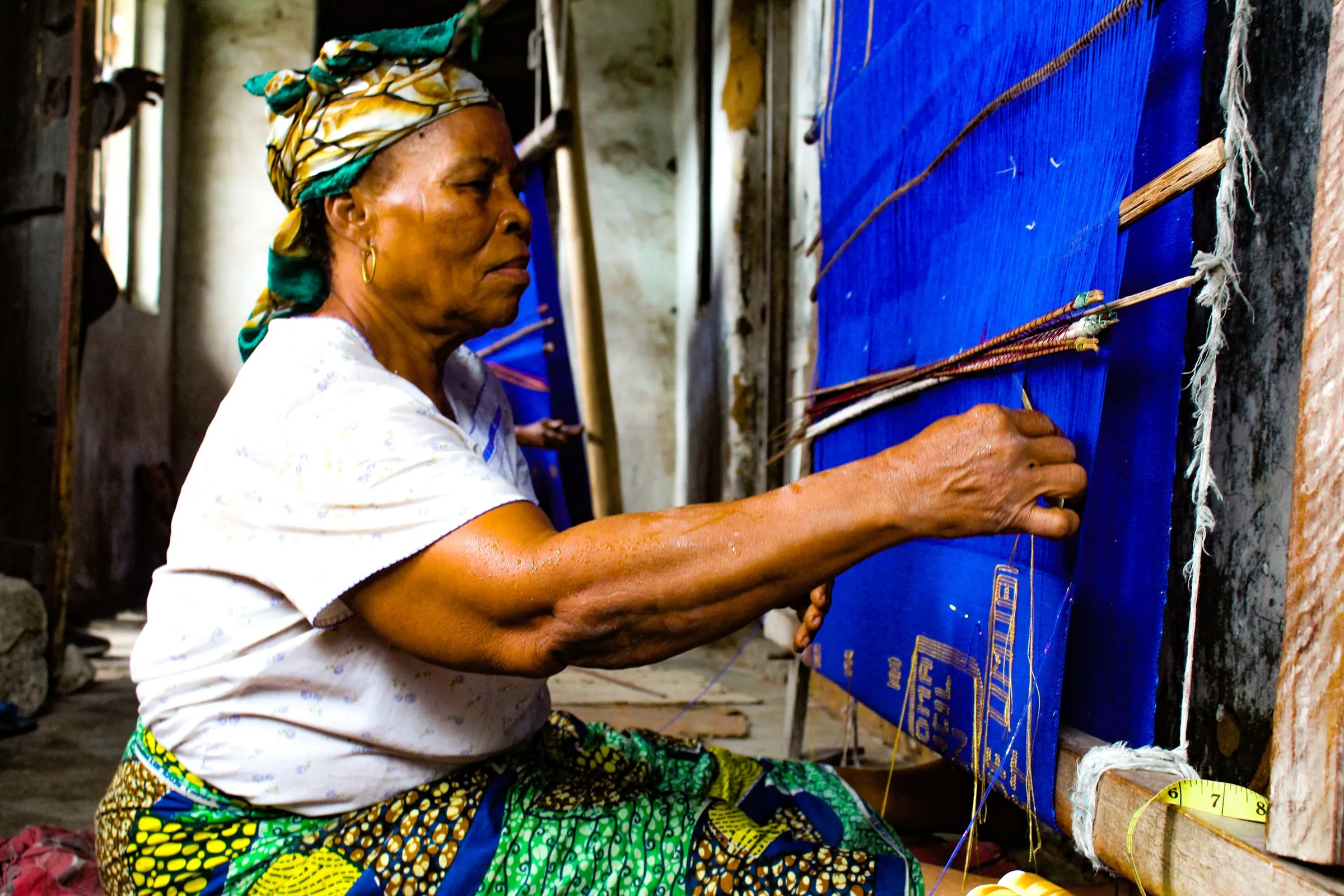
A woman deeply focused on weaving Akwete using a traditional loom.
Akwete cloth is a beautiful, handwoven fabric made by the Igbo people in Nigeria, specifically in the town of Akwete. This textile is traditionally created by women on a special loom and is known for feeling heavy and dense. Its distinct look comes from weaving in extra threads, called weft threads, by hand. These added threads use bright, contrasting colors and materials like silk or rayon to form the complex, decorative patterns within the fabric itself.
-
Creator
-
Nnaemeka Ugochukwu
-
Contributor
-
Ifeoma Nnewuihe
-
Date
-
01/05/2024
-
Place
-
Southeast, Nigeria
-
Time Period
-
Mid-Nineteenth Century
-
Cultural Use
-
Akwete cloth plays an essential and multifaceted role in Igbo social and ceremonial life. Primarily worn by women as decorative wrappers or dresses, the textile is indispensable as ceremonial wear, marking significant occasions such as weddings, coronations, and burials. The fabric's inherent value is also demonstrated by its traditional inclusion as an important wedding dowry. Beyond personal attire, the cloth has varied applications depending on its texture and weave; coarser versions of Akwete are utilized for elaborate masquerade attire, while specialized raffia weaving is often employed for warrior headgear. Crucially, the intricate patterns woven into the cloth are highly symbolic, with distinct motifs, such as the tortoise (ikaki), conveying deeper meanings that represent wisdom, chieftaincy, peace, and the wearer's overall social status.
-
Technique
-
Handwoven
The Akwete textile tradition is characterized by a specialized, wholly manual weaving process carried out primarily by women on a traditional vertical loom—the widest of its kind in Nigeria. The materials utilized include machine-spun cotton, raffia, and hemp for both the warp and weft threads, manipulated using essential tools like the heddle, beater, and shuttle. The foundational structure begins with a continuous warp setup that establishes a solid-colored, warp-face plain-weave base. The fabric's signature elaborate designs are created during the weaving process by carefully hand-inserting supplementary weft threads, which pass over and under the warp to form intricate patterns. These complex motifs often feature abstract geometric arrangements, figurative symbols, or chevron arrangements of color. The final Akwete cloth is lightweight, breathable, and features a distinct texture, commonly worn by Igbo women as wrappers or tied skirts, by men for traditional shirts, and adapted for various home furnishings like cushion covers and curtains.
-
Textile Type
-
Akwete
-
Region
-
Southeast, Nigeria
Akwete cloth originates from the town of Akwete in the Abia State of southeastern Nigeria. This region is home to the Igbo people, who are renowned for this specific hand-weaving tradition. The area is culturally significant for its preservation of intricate textile techniques, with Akwete serving as a major craft center where the weaving of this dense, patterned cloth is primarily carried out by women.
-
Item Type
-
Cloth
-
Language
-
English
 Akwete