-
Title
-
Adire Eleko
-
Description
-
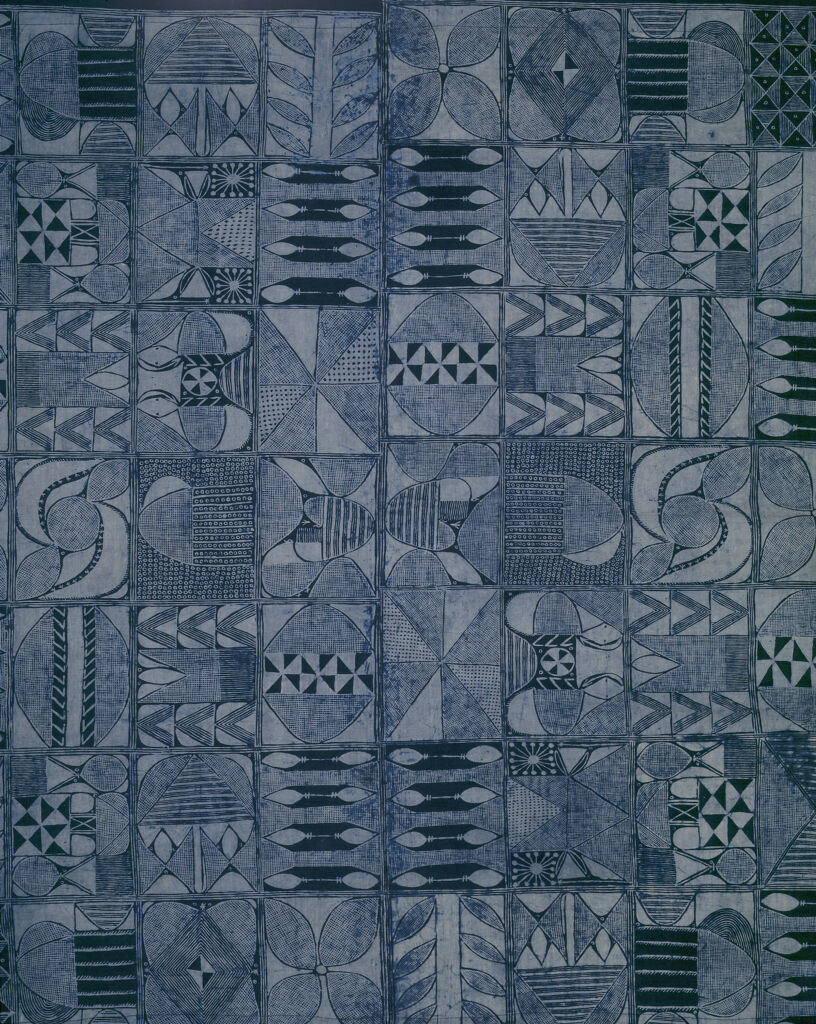
A display of Adire Eleko in a museum.
Adire Eleko is a Yoruba dyeing technique from Nigeria where artisans use a thick paste made from cassava starch to draw patterns onto cotton fabric. When the cloth is later dipped into the deep blue indigo dye, the starch acts as a shield, stopping the dye from reaching the fabric underneath. When the paste is finally washed away, it reveals detailed, light-colored designs—often featuring geometric shapes, animals, and plants—against the vibrant indigo background.
-
Creator
-
Yoruba Artist(Nigeria)
-
Contributor
-
Fred and Rita Richman Collection
-
Place
-
Southwest, Nigeria
-
Time Period
-
Twentieth Century
-
Cultural Use
-
Adire Eleko functions as a profound visual language and form of self-expression for Yoruba women, where its intricate patterns and symbols communicate social standing, personal stories, and shared cultural heritage. Historically, the most labor-intensive and intricately designed Adire fabrics were reserved for the nobility, serving as a powerful and visible expression of wealth and high status. The cloth's traditional use was primarily as a wrapper, tied around the body, or as a vibrant adornment, but the dynamic art form has evolved significantly. Today, Adire Eleko seamlessly blends cultural legacy with contemporary fashion, expanding its use to include stylish head-ties, modern tailored garments for both men and women, and continues to gain appreciation worldwide for its unique aesthetic and rich cultural heritage.
-
Technique
-
Resist Dye (Eleko)
The Adire Eleko technique is a distinctive form of Nigerian resist-dyeing that utilizes a thick cassava starch paste (eleko) to create patterns. The process starts by preparing the starch paste, mixing cassava flour with hot water until it forms a smooth, viscous mixture. Artisans then hand-paint the desired designs onto the cotton fabric, often using a chicken feather or a stencil for precision. After the paste is applied, it is left to dry completely in the sun. The cloth is then submerged into an indigo dye bath. The dry cassava paste acts as a barrier, preventing the dark indigo dye from penetrating the covered areas. To achieve a deeper, richer hue, the cloth may be dipped multiple times. Finally, the dried starch paste is scraped off and the textile is washed, revealing the intricate white or light blue patterns against the saturated, deep indigo background.
-
Textile Type
-
Adire
-
Region
-
Southwest Nigeria (Yoruba)
Adire Eleko is produced by the Yoruba people in Southwestern Nigeria, particularly originating from cities like Abeokuta and Ibadan in Ogun and Oyo States. This region is known for its strong indigo dyeing traditions, and the proximity to sources of indigo and cassava (the core material for the starch resist) has made it the primary cultural and commercial center for this hand-painted technique.
-
Item Type
-
Cloth
-
Language
-
English
 Adire Eleko